Kasaragod:
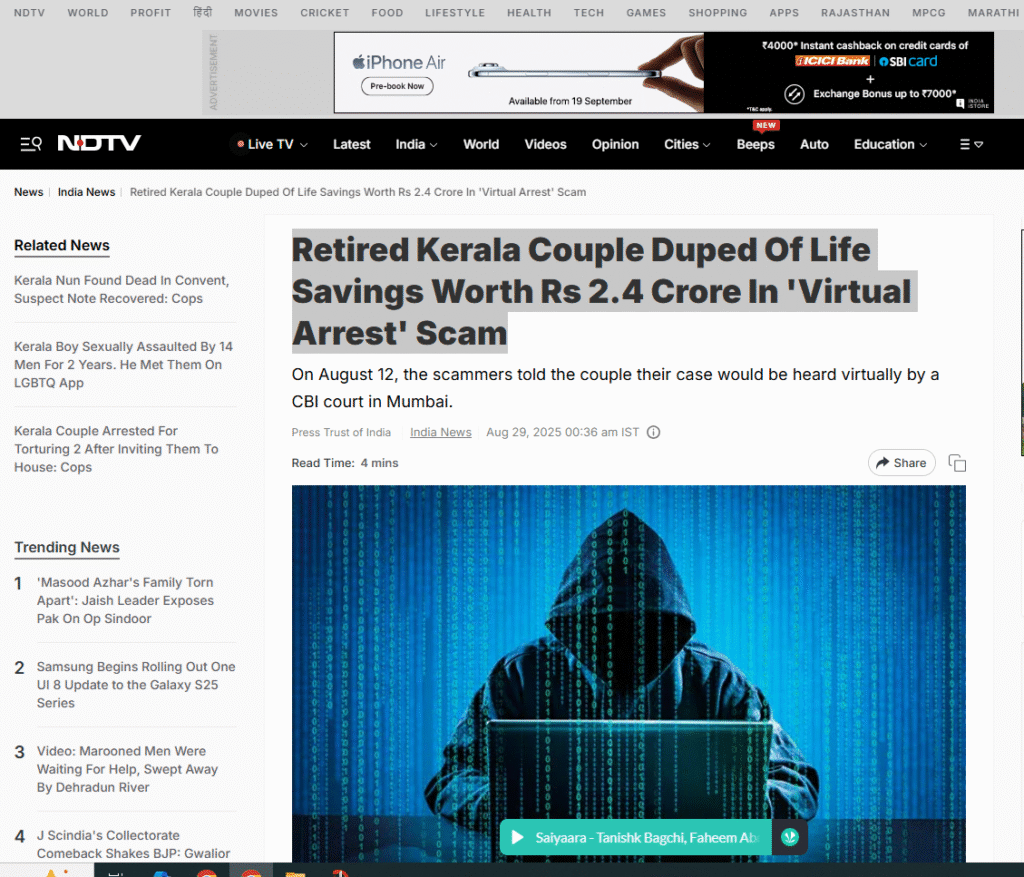
An elderly couple, both retired government employees, lost Rs 2.4 crore after being held under a “virtual arrest” for 11 days by cyber fraudsters in Kanhangad, police said on Thursday.
“Virtual arrest” is a cyber scam in which fraudsters impersonate police or enforcement agency officials and threaten victims through WhatsApp video calls, claiming they are booked in criminal cases.
According to police, the victims were a 69-year-old retired teacher and his 72-year-old wife, a retired government homoeopathy doctor. The couple lives alone in a rented house in Kanhangad.
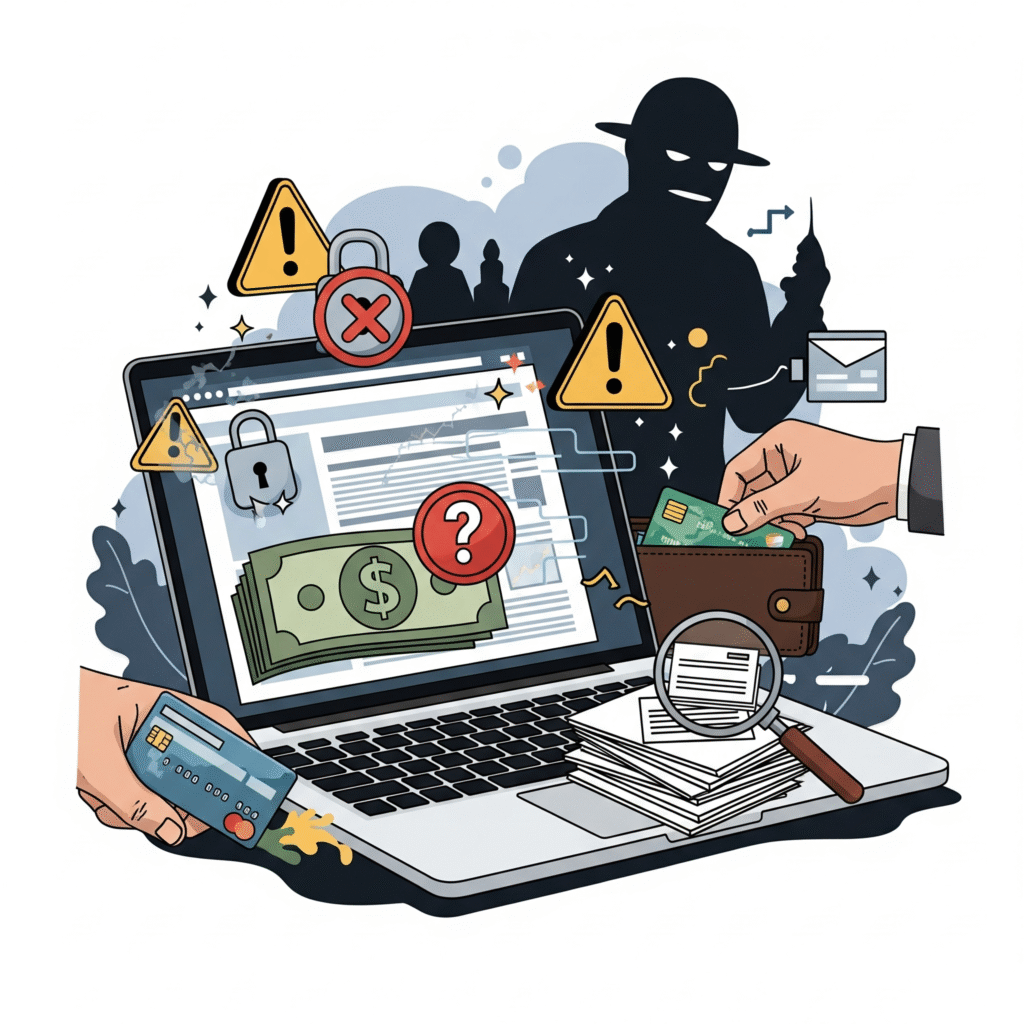
“It was on the morning of August 10 that my wife received a call from an international number. When I answered, a man speaking in Hindi claimed he was from the Telecom Regulatory Authority of India (TRAI). He said my wife was involved in a money laundering case being investigated by the Central Bureau of Investigation (CBI) and that an officer from the agency would soon contact us,” the retired teacher said, requesting anonymity.
Minutes later, the couple received a WhatsApp video call. “On screen was a man dressed in a police uniform who told us to remain calm. Soon, a translator joined the call and began translating from Hindi to Malayalam. They claimed that during a raid on the residence of former Jet Airways Chairman Naresh Goyal, my wife’s ID card and bank details had been recovered. As proof, they showed an ATM card, though the details were unclear. They alleged that financial transactions had taken place between Goyal and my wife,” he said.

When the couple denied having any account in the bank shown, the fraudsters displayed a fake Aadhaar card in their name. “They told us we were under virtual arrest and ordered us to stay in front of the mobile phone with the video call on at all times. We had to seek permission from the person on screen even to attend to basic needs. My wife had to ask for approval to visit the doctor for a medical appointment,” he said.
On August 12, the scammers told the couple their case would be heard virtually by a CBI court in Mumbai. “They showed us what appeared to be a courtroom on the call, with a judge and lawyers present. When the judge entered, we were instructed to stand up. Our names were called out and some discussions took place, but we couldn’t follow what was being said,” he recalled.
Later, they were told their bank accounts needed to be “verified.” “For this, we were instructed to transfer all our savings to bank accounts provided by them. They claimed these accounts belonged to the Supreme Court,” he said.
Between August 19 and 21, the couple transferred Rs 2.4 crore in four transactions as directed. “This was our entire life’s savings. We didn’t even buy a house, thinking the money would help with medical expenses in our old age,” he said.
They realised it was a scam only when a relative visited their home. “I was sitting in front of the phone with the video call on. My wife quietly told our relative about what was happening after taking him to another room. He immediately stated that it was cyber fraud and urged us to contact the police. I pretended to go out to buy medicines and went to the bank to meet the manager. Later, we went to the police station. The fraudsters even called while we were at the station, but once they realised where we were, they abruptly disconnected,” he said.
Kasaragod Cyber Police registered a case on August 22 under Section 316(4) of the Bharatiya Nyaya Sanhita and Section 66(D) of the Information Technology Act.
“We acted quickly and moved to freeze the bank accounts where the money was sent. Bank officials informed us that around Rs 55 lakh was still in these accounts, which we are trying to recover. The investigation is progressing to trace the fraudsters and their network. Cases of virtual arrest scams are on the rise, with elderly people being the prime targets. We are now running awareness campaigns through media platforms to warn the public,” a police officer said.
Asked if he had heard of similar frauds before, the victim said, “My wife and I hardly use mobile phones. We never knew about such scams. We are still struggling to recover from the shock.”
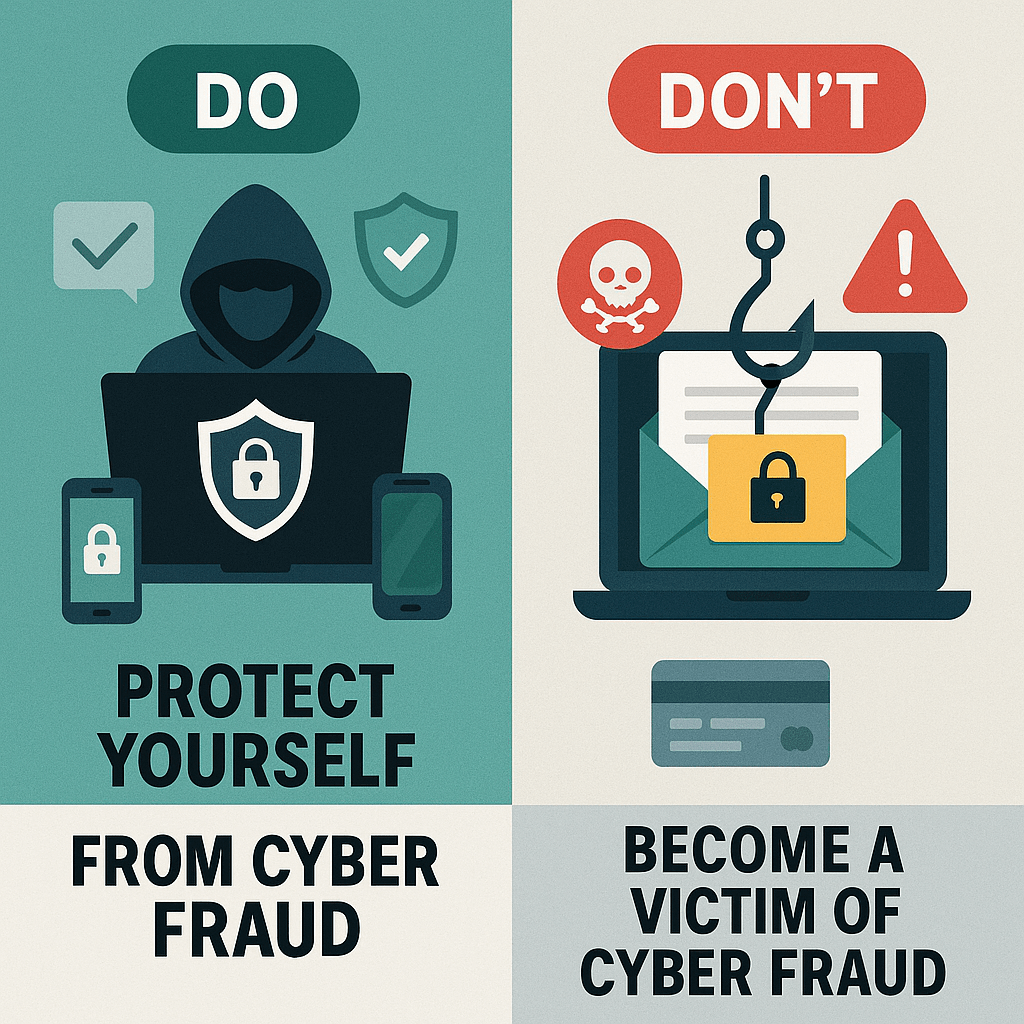
Do’s (What You Should Do)
- Use Strong Passwords
- Create unique, complex passwords with a mix of letters, numbers, and symbols.
- Use a password manager instead of reusing the same password.
- Enable Two-Factor Authentication (2FA)
- Always turn on 2FA for banking, email, and social media accounts.
- Verify Before You Trust
- Double-check sender details in emails, SMS, or calls before clicking links or sharing information.
- Contact the company directly through official numbers/websites.
- Keep Software Updated
- Regularly update your phone, computer, and apps to patch security vulnerabilities.
- Use Secure Connections
- Access sensitive accounts only over trusted Wi-Fi or VPN.
- Avoid logging in on public/shared computers.
- Report Suspicious Activity
- Immediately report fraud attempts to your bank, cybercrime portal (cybercrime.gov.in in India), or local authorities.
- Educate Yourself & Family
- Stay updated on the latest fraud trends (e.g., KYC fraud, OTP scams, investment scams).
- Teach children and elders about safe online habits.
Don’ts (What You Should Avoid)
- Don’t Share OTPs, PINs, or Passwords
- Banks and genuine companies will never ask for these.
- Don’t Click Unknown Links
- Avoid clicking on links received via SMS, WhatsApp, or email from unverified sources.
- Don’t Download Suspicious Apps or Attachments
- Many fraudsters disguise malware as bank apps, job offers, or courier updates.
- Don’t Overshare on Social Media
- Limit posting personal details like phone numbers, addresses, travel plans, or financial info.
- Don’t Rush into Financial Decisions
- Fraudsters use urgency (“last chance”, “limited offer”) to trick you. Always verify calmly.
- Don’t Ignore Red Flags
- Grammar mistakes, unofficial email IDs, or caller ID spoofing are warning signs.
- Don’t Transfer Money to Unknown Accounts
- Even if asked by someone claiming to be a friend/relative—always confirm personally.
Final thought to avoid cyber frauds
Final Thought on Cyber Fraud
Cyber fraudsters succeed when we act in haste or trust blindly. The simplest way to stay safe is to pause, verify, and think twice before you click or share. Technology helps, but awareness is your strongest shield.
At CyberSathhi.com, we are committed to being your digital companion in the fight against online fraud—spreading knowledge, creating awareness, and guiding you to stay one step ahead of cybercriminals.
👉 Stay alert. Stay informed. Stay safe—with Cyber Sathhi by your side.